
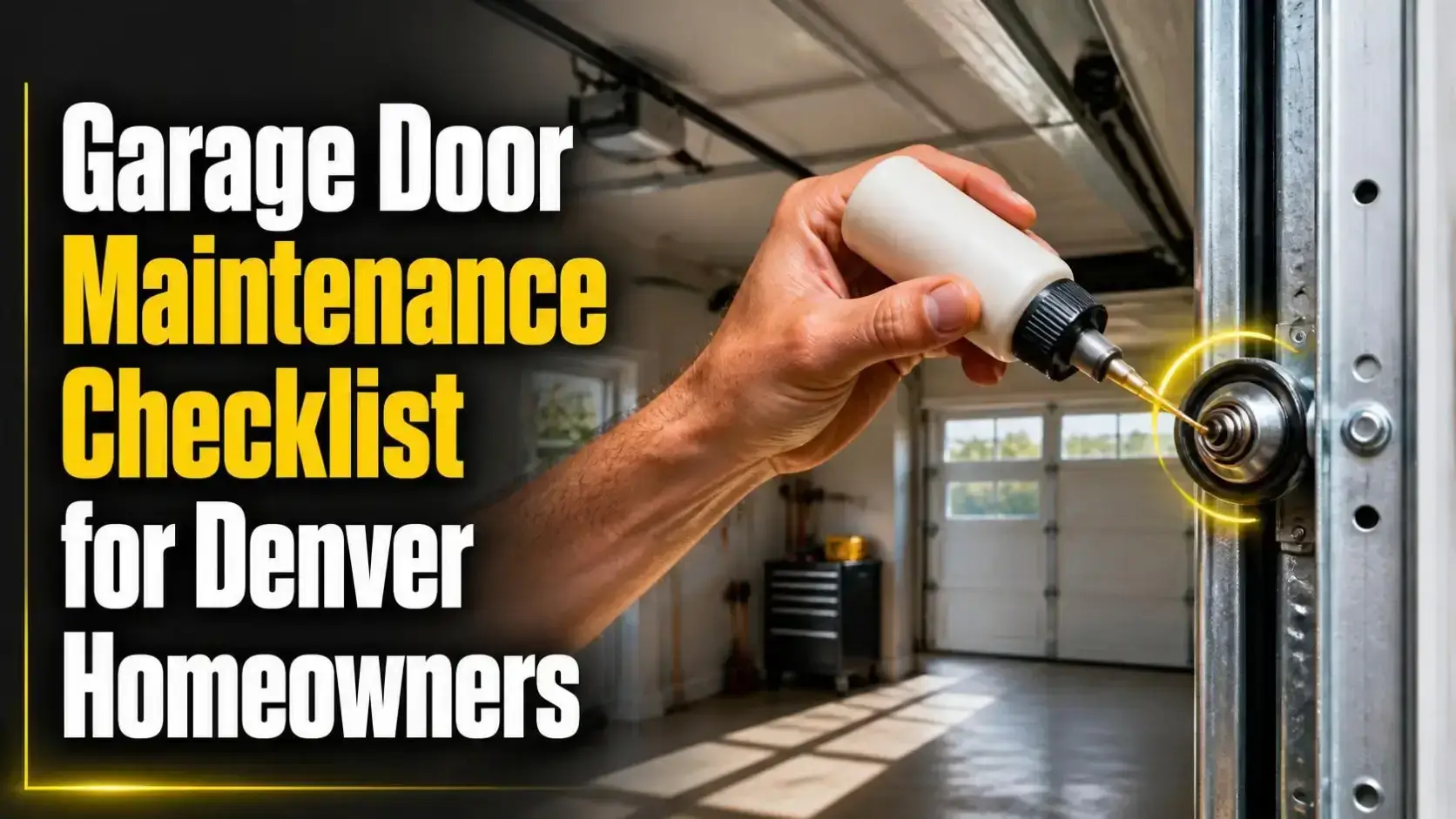
Garage Door Maintenance Checklist for Denver Homeowners
Most people only think about their garage door when it stops working. By then the fix usually costs more than it needed to. A garage door maintenance checklist run on a real schedule catches worn parts while they are still cheap to fix, and it matters more here than in mild climates.
Denver sees 60-degree swings in a single day, dry air that dries out lubricant fast, and altitude that adds extra strain on springs. This is the checklist we run as a Denver garage door repair crew, broken down by how often each task actually needs to happen so a garage door maintenance checklist stays useful instead of vague.
Monthly Walk-Around
Once a month, watch a full open-and-close cycle. Listen for grinding, popping, or scraping, since sound usually shows up before failure does. Check the bottom seal and weatherstripping for gaps, since a worn seal lets Denver’s dry cold straight into the garage.
Look at the tracks for dents or debris, and check that cables sit tight with no fraying. None of this takes more than five minutes, and it is the single most useful habit in any garage door maintenance checklist worth following.
Quarterly Lubrication
Every three months, apply lithium-based grease to the rollers, hinges, and the track itself. Skip WD-40 here, since it acts as a cleaner and evaporates fast rather than lasting as a lubricant. Dry air pulls moisture out of factory lubricant faster than in humid states, so a Denver garage door often needs this step more often than the once-or-twice-a-year advice written for other regions. A quiet, smooth door on a dry Colorado day is usually a sign someone stuck to the schedule.
Balance And Safety Sensor Test
Twice a year, test the door balance. Disconnect the opener, lift the door halfway by hand, and let go. A balanced door stays in place. If it drifts up or falls, the spring tension is off and needs a professional, since spring adjustment carries real injury risk and is not a task for a homeowner to attempt.
At the same time, wipe down the safety sensors near the floor and confirm the door reverses when something blocks its path. A dusty or misaligned sensor is the usual cause behind a door that refuses to close, and it deserves a look before anyone assumes the opener itself has failed.
If grinding or banging shows up during any of these checks, run it through our why is my garage door making noise guide before calling for repair, since the sound itself often points to exactly which part needs attention.
Annual Hardware And Weatherstripping Check
Once a year, go through every bolt and bracket with a socket wrench. Vibration from daily use loosens hardware over time, and loose brackets are a common source of noise and uneven movement. Replace bottom seal and side weatherstripping once it cracks or flattens, since Denver’s strong UV exposure and freeze-thaw cycles break down rubber seals faster than in cloudier, milder climates. A cracked seal also drives up heating costs on an attached garage, so this step pays for itself and belongs on every garage door maintenance checklist, not just a once-in-a-while glance.
Spring Wear Check
Springs carry the full weight of the door and wear out from cycle count, not age alone. This is a task most homeowners skip in a typical garage door maintenance checklist, but it matters since a snapped spring can total an opener motor on its way down
Look for visible gaps between coils or a slightly stretched look on extension springs. Never touch spring tension by hand. If a spring looks worn or the door feels heavier than usual when lifted manually, that is a sign to schedule a professional spring inspection rather than wait for it to snap without warning.
Annual Professional Tune-Up
Even with regular DIY care, have a technician run a full inspection once a year. A professional checks opener force settings, tests auto-reverse with a real obstruction, and inspects cables and drums up close, since these carry tension that is not safe to test from home. This is also when a technician catches early wear on parts that still look fine from the outside, which a purely visual homeowner check will miss every time.
A garage door maintenance checklist followed on this schedule is the cheapest insurance a Denver homeowner can buy for their garage door. Most emergency calls trace back to one skipped step that would have taken five minutes to catch. Stick to a garage door maintenance checklist like this one and most of those calls never happen in the first place. Call (833) 435-8883 and we will walk through what your door needs based on its age and how often you use it.
Garage Door Maintenance: Your Questions Answered
Quick answers to what Denver homeowners ask about how often to service a door, what is safe to DIY, and why upkeep matters here.
How often should I do garage door maintenance? To CheckChecked
Run a quick visual check monthly, lubricate moving parts every three months, test balance and sensors twice a year, and book a professional tune-up once a year. Doors used several times a day benefit from a mid-year check on top of that.
What maintenance can I safely do myself? To CheckChecked
Visual inspections, cleaning tracks, lubricating rollers and hinges, and tightening loose hardware are all safe for a homeowner. Anything involving spring tension, cable adjustment, or opener force settings should go to a trained technician.
How do I know if my garage door is balanced? To CheckChecked
Disconnect the opener and lift the door halfway by hand. A balanced door stays in place on its own. If it drifts upward or falls back down, the spring tension needs a professional adjustment.
Why does my garage door need more maintenance in Denver than other cities? To CheckChecked
Denver’s dry air dries out lubricant faster, daily temperature swings stress metal components, and strong UV exposure breaks down weatherstripping sooner than in cloudier, more humid regions.
What happens if I skip garage door maintenance? To CheckChecked
Small issues like a loose bracket or dry hinge turn into grinding noise, uneven movement, or a stuck door. Skipped maintenance is behind most emergency repair calls, and those almost always cost more than routine upkeep would have.
Skip the Checklist. Book a Denver Tune-Up.
Our technicians run the full inspection for you and fix small problems before they turn into emergency calls.
- 4.8 Google Rating
- 28+ Years in Denver
- Fixed Right or We Come Back