
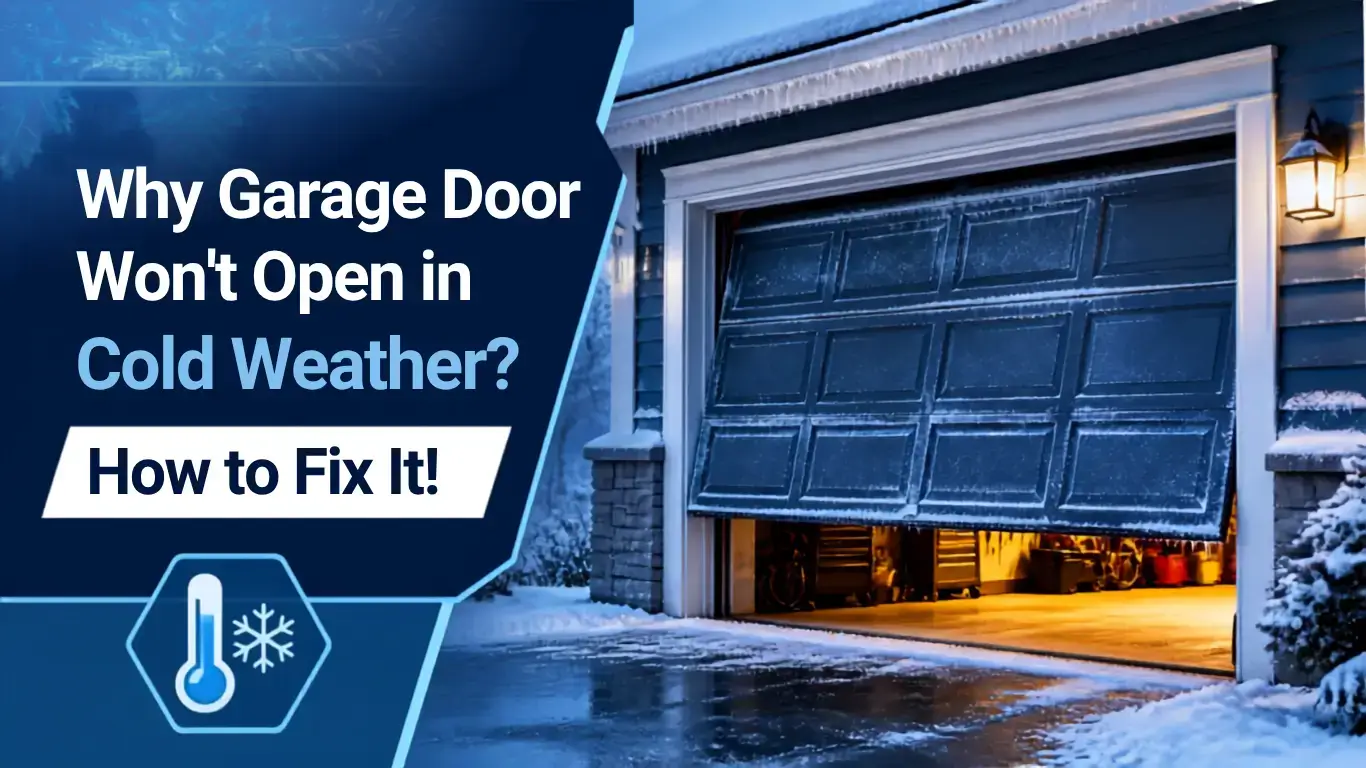
Garage Door Won’t Open in Denver’s Cold Weather: How to Fix It
Denver mornings swing fast between mild and freezing, and that swing is hard on a garage door. When a garage door won’t open in cold weather, the cause is rarely random. It usually comes down to grease, metal, or a spring under stress. This guide breaks down why it happens, what you can check safely, and when to call for help.
Why Cold Air Stops the Door
When temperatures drop, standard grease thickens on rollers and tracks. This adds drag the opener motor was not built to fight against. Metal parts also shrink slightly in the cold, so clearances that worked fine in October get tighter in January. That is one of the most common reasons a garage door won’t open in cold weather across the Front Range.
Springs feel the cold too. A torsion spring loses a bit of flexibility as the temperature falls, so it carries more strain to lift the same door. An older spring that was already worn can snap during a cold snap rather than last through another season. This is why so many spring calls come in right after the first hard freeze of the year.
Weatherstripping matters too. Cracked seals let cold air push against the door, and that adds resistance for the opener.
Frozen Seals and Stuck Doors
Sometimes the door will not budge because the bottom seal froze to the concrete overnight. Moisture under the seal turns to ice, and the weight of the door locks it in place. This looks like a motor problem, but it is not. A light tap along the bottom edge, or gentle heat from a hair dryer, can break the ice bond without any force on the opener.
A garage door won’t open in cold weather just because of ice, either. Snow and slush that build up along the track can jam the rollers before the door even starts to move.
What You Can Check First
Start simple before you assume the worst. Disconnect the opener and try to lift the door by hand. If it moves smoothly, the opener settings or sensors likely need attention. If it feels heavy or resists halfway up, a spring or track problem is the more likely reason your garage door won’t open in cold weather.
Look at the tracks for frost, dirt, or debris. Check that the sensors near the floor are clear and aligned, since a knocked sensor will not let the door close at all. Also check the opener’s force setting, since cold air can trip the safety reverse by mistake. These checks take a few minutes and often point straight to the real cause.
When to Call a Professional
Springs and cables store serious tension. You should not touch them without training, since that is dangerous. If a garage door won’t open in cold weather and you suspect a broken or stretched spring, stop and call a professional right away. The same goes for a door that stalls partway or drops suddenly on its own.
Our team handles spring adjustments and replacements safely, and we can also check cable tension while we are there. If the opener itself seems dead, we will test the motor, logic board, and wiring before we recommend a repair or a full replacement.
Denver’s Weather Makes This Worse
Denver does not sit at one steady winter temperature. It can swing 40 or 50 degrees in a single day, and that daily freeze thaw cycle stresses metal parts more than a steady cold climate would. Homes at altitude also deal with drier air, which changes how lubricant performs.
This is part of why a garage door won’t open in cold weather more often here than in milder states. A tune up before the first hard freeze catches a stiff spring or a dry track before it turns into a stuck door on a work morning.
How to Prevent It Next Winter
A few habits help avoid this problem altogether. Switch to a lubricant rated for low temperatures before the cold sets in, since regular grease is often the first thing to fail. Wipe down and inspect the tracks each fall for rust or buildup.
Test the door’s balance. Disconnect the opener and lift the door halfway by hand. It should hold in place on its own, not drop or fly up. If it does either, the spring tension is off and needs a professional look before winter sets in.
We offer seasonal tune ups that cover exactly this, along with a full check of your springs, rollers, cables, and opener settings. Homeowners who book a fall tune up rarely deal with a garage door that won’t open in cold weather later that season, since we catch the warning signs early.
If your garage door won’t open in cold weather right now, do not force it. If you force a stuck door, you can bend a track or snap a weak spring, and that turns a simple fix into a costly one. Call us at (833) 435-8883 and we will send a technician out to diagnose it safely and get your door open again.
Common Questions
Cold Weather Garage Door FAQs
Why won’t my garage door open when it’s cold?
Cold makes grease thicken and metal parts shrink slightly, so everything moves tighter than it did in warmer months. Add a stiff spring or a frozen seal, and the door just will not budge. Most of the time it is a mix of these, not one single cause.
Why is my garage door stuck to the ground?
This usually means the bottom seal froze to the concrete overnight. Moisture underneath turned to ice and locked the seal in place. A gentle tap or some mild heat along the bottom edge breaks it loose without hurting the door.
Can cold weather actually break my garage door spring?
Yes. Metal springs get stiffer as temperatures fall, so they carry more load than they do in summer. If a spring was already worn, a cold snap is often what finally makes it snap.
Why does my garage door only open partway in winter?
This usually points to a bent or dirty track, or an opener force setting that is too sensitive for the extra resistance cold weather adds. It can also mean a sensor got knocked out of alignment.
Should I use different lubricant in winter?
Yes. Regular grease thickens in the cold and adds drag. A lubricant rated for low temperatures keeps rollers and hinges moving the way they should, even during a hard freeze.
Garage door won’t open in cold weather?
Do not force it. Our technicians can diagnose frozen seals, stiff springs, or track issues fast and get your door working safely again.
Call (833) 435-8883